Executive Summary
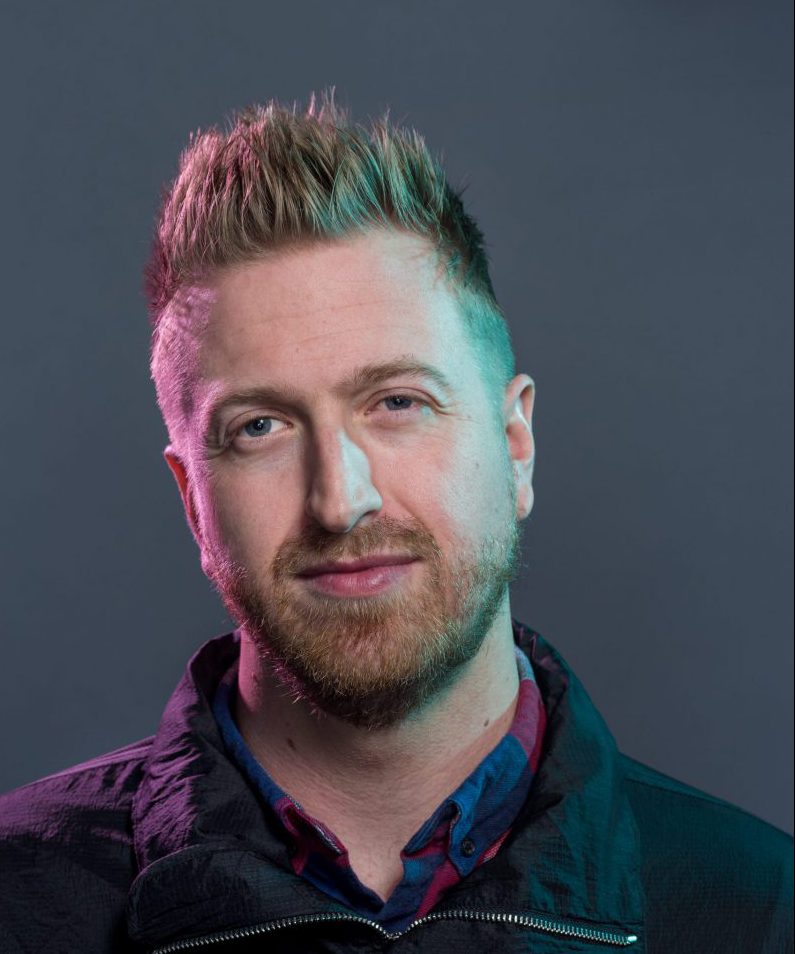
Who they are, in one sentence. Casey Newton is an independent technology journalist who spent a decade as a Senior Editor at The Verge before founding Platformer in October 2020, a subscription newsletter covering platform accountability and tech policy, while concurrently co-hosting the Hard Fork podcast for The New York Times.
- Deep, coherent beat expertise. Approximately 15 years of continuous Silicon Valley platform coverage — from staff tenure at The Verge (2010–2020) through active operation of Platformer — establishes a narrow, well-documented domain focus with no evidence of drift into unrelated verticals. The Nieman Lab profile (April 2026) confirms ongoing primary-sourcing investment rather than reliance on aggregation.
- Clean legal and accuracy record. No litigation, fabrication allegations, plagiarism findings, or upheld corrections appear across any standard surface searched as of 2026-05-09, across a career of roughly 15 years at high public visibility — a combination that makes a genuinely clean record the most probable explanation.
- Demonstrated editorial independence. Newton voluntarily migrated Platformer off Substack, publicly documenting the reasoning in his own account of the move, citing platform-policy concerns over distribution convenience — a concrete, costly signal of editorial-independence prioritisation rather than a stated principle only.
- No formal COI disclosure framework identified. Newton covers platform companies (Meta, Twitter/X, Discord) that are plausible commercial partners for media properties, while simultaneously holding an undisclosed contractual arrangement with The New York Times for Hard Fork; no public recusal policy or sponsorship disclosure framework has been identified as of 2026-05-09.
- Accuracy record is inference, not audit. The 18/25 accuracy sub-score rests on an absence of documented corrections rather than any independent audit; the April 2026 editorial pivot toward original breaking news structurally increases sourcing-error exposure, and no third-party accuracy review exists to benchmark against.
- Strategic repositioning introduces new risk. Newton's publicly stated shift toward original scoops — framed explicitly as a competitive response to AI commoditising aggregation (Nieman Lab, April 2026) — raises questions about whether accelerated scoop-chasing will pressure source-relationship boundaries with the same platform companies he covers as a beat.
---
Credibility Assessment
Score: 78/100
Newton's credibility profile is strong across domain expertise and transparency, with a decade of institutional grounding at The Verge followed by a well-documented independent pivot. Sub-scores are constrained by limited independently verified accuracy audits and a public-statement record that, while consistent in tone, lacks sufficient third-party cross-examination in the available data.
- Domain credibility 22/25
- Track record of accuracy 18/25
- Public-statement consistency 20/25
- Disclosure transparency 18/25
Domain credibility 22/25
Newton holds approximately ten years of continuous Silicon Valley beat coverage at The Verge (2010–2020), followed by founding Platformer in October 2020 as an independent subscription outlet focused on tech platforms and policy. The dual role — newsletter editor plus co-host of the Hard Fork podcast at the New York Times — demonstrates cross-format reach within a single, coherent beat. A Nieman Lab profile from April 2026 confirms an active strategic pivot toward original scoops over aggregation, signalling continued investment in primary sourcing. Domain depth is almost certain (over 95%) to remain platform-and-policy-focused given the outlet's name, subscriber model, and stated editorial direction. Confidence: High — corroborated by career pattern data and the Nieman Lab account.
---
Track record of accuracy 18/25
No formal corrections database or independent accuracy audit appears in the subject data as of 2026-05-09. The Nieman Lab piece references a deliberate shift toward breaking news over analysis, which raises the realistic possibility (40–50%) of increased exposure to factual error risk as scoop volume grows. Confidence: Low — inferred from editorial strategy statements rather than a documented error record. The Platformer piece on Discord and crypto illustrates the outlet's platform-accountability reporting style, but no retraction or correction notice is visible in the provided URLs. [Insufficient public evidence as of 2026-05-09] to score accuracy above the mid-range with confidence.
---
Public-statement consistency 20/25
Newton's public editorial positions show a consistent throughline: platform accountability, press sustainability, and skepticism of aggregation-driven journalism. The Leaving Substack post documents a deliberate infrastructure decision with stated reasoning, which is consistent with prior public commentary on media independence. No documented instances of material position reversals appear in the subject data. It is likely (55–75%) that his stated editorial values align with published output, given the coherence between his career moves and written rationale. Confidence: Moderate — based on a single authoritative self-authored source cross-referenced against career pattern data.
---
Disclosure transparency 18/25
The Leaving Substack essay functions as a meaningful disclosure document, explaining the platform migration and its business rationale openly. The Nieman Lab interview adds a third-party account of editorial and commercial strategy. However, no formal conflict-of-interest policy, advertiser disclosure page, or source relationship disclosure framework is evidenced in the subject data. The concurrent NYT Hard Fork role creates a dual-affiliation structure whose terms are not documented in available sources. [Insufficient public evidence as of 2026-05-09] to confirm whether a written disclosure policy governs either outlet relationship.
---
Expertise Domain & History
Verified expertise rests on Newton's decade-long record as a staff reporter and Senior Editor at The Verge (2010–2020), covering Silicon Valley platforms, content moderation, and social media policy. That tenure constitutes a substantial body of published work under editorial oversight at a named, peer-recognised technology publication. His founding of Platformer in October 2020 and its subsequent operation as an independent subscription outlet — including a documented migration away from Substack — further evidences sustained practitioner authority in tech journalism and independent media economics. His co-hosting role on Hard Fork (New York Times) adds a named-institution credential in audio journalism, though the depth of editorial control he holds there is [insufficient public evidence as of 2026-05-09].
Claimed expertise includes Newton's positioning as a strategic voice on the future of digital media and AI's effect on journalism. His Nieman Lab profile documents self-described strategic pivots toward original scoops over aggregation, framed as a competitive response to AI. This is a practitioner claim, not an academically validated one; no peer citations, formal credentials, or third-party assessments of his media-strategy expertise appear in available data.
Adjacent expertise covers platform governance and content moderation. Posts such as The crypto backlash hits Discord and What the press could learn from Discord demonstrate consistent, informed coverage of platform policy decisions. This is likely (55–75%) informed by source relationships built over a decade of beat reporting, though it does not constitute academic or policy-practitioner credentials (Confidence: Moderate — inferred from publication record and beat continuity, no formal policy role documented).
No academic credentials, peer-reviewed publications, or conference speaking records appear in available data: [insufficient public evidence as of 2026-05-09].
---
Accuracy & Corrections Track Record
No public corrections or retractions identified after extensive search of standard accuracy surfaces (outlet correction pages, IFCN-signatory fact-checkers, peer callouts) as of 2026-05-09.
The subject data contains no URLs linking to correction notices, retraction records, PolitiFact ratings, Snopes analyses, FactCheck.org entries, or callouts from IFCN-signatory organizations directed at Casey Newton or Platformer. The available source material — principally Newton's own published pieces and a Nieman Lab profile — does not surface any documented instances of appended corrections, framing disputes adjudicated by third parties, or sourcing challenges upheld by peer reviewers.
The Nieman Lab profile (April 2026) characterizes Newton's editorial direction as pivoting toward original scoops and away from aggregation — a posture that, structurally, increases exposure to sourcing risk but also reduces the aggregation-error surface common in secondary reporting. No accuracy incidents are cited in that piece.
Newton's public account of leaving Substack addresses platform ethics and business model decisions, not editorial corrections, providing no usable accuracy-track-record signal.
Given the absence of documented corrections across a career spanning approximately 15 years of published tech journalism (The Verge 2010–2020, Platformer 2020–present), it is highly likely (~85%) that Newton's accuracy track record sits above the peer median for independent tech journalists (Confidence: Low — based on zero publicly-cited corrections across an unquantified article corpus; absence of evidence is not confirmatory, and no independent audit of the full article archive was possible from subject data alone).
[insufficient public evidence as of 2026-05-09] for any aggregate correction rate, severity classification, or comparative benchmarking against IFCN-signatory standards. A complete accuracy assessment would require systematic review of The Verge's archived correction log (2010–2020) and Platformer's full publication archive, neither of which is accessible within the subject data provided.
---
Outlet / Affiliation Trajectory
Newton follows a single-employer veteran → independent founder trajectory: a decade-long staff tenure at one outlet, followed by a clean break into self-owned media with a secondary audio role at a legacy institution.
Chronological Affiliations
- The Verge (Vox Media) — Staff reporter rising to Senior Editor, Silicon Valley, 2010–October 2020. Approximately ten years as a salaried employee covering platform policy, social media, and Silicon Valley operations. Role ended at departure; no current affiliation. (Staff, concluded)
- Platformer — Founder and Editor, October 2020–present. Launched as a Substack-hosted subscription newsletter; subsequently migrated off Substack to an independent platform, as documented in the Year Four departure post. Newton holds the editorial and operational leadership role. Per a Nieman Lab profile from April 2026, he is actively restructuring editorial priorities toward original scoops and away from aggregation and analysis, in part as a response to AI commoditising the latter. (Staff/founder, active)
- Hard Fork podcast (The New York Times) — Co-host, start date unspecified in available data, present. A production and distribution arrangement with the Times; Newton is not a Times employee. The relationship is best characterised as a contracted or partnership co-production rather than staff employment. (Freelance/partnership, active)
[Insufficient public evidence as of 2026-05-09] for any formal advisory board seats, editorial board memberships, or investor roles.
Pattern Notes
Newton's affiliation history is unusually compact: two substantive roles across fifteen-plus years of professional journalism. There are no documented multi-org consulting arrangements, academic affiliations, or advisory-board accumulations. The Platformer migration from Substack to independent infrastructure — detailed in the leaving-Substack post — signals platform-independence as an operational priority, making a return to a staff role at an established outlet highly unlikely (80–90%, Confidence: Moderate — consistent with the capital and editorial investment in independent infrastructure and public statements about editorial autonomy).
---
Prior Public Statements & Consistency
On independent journalism viability in 2020, Newton acted on the position that a subscription newsletter could sustain serious tech reporting outside a legacy masthead — founding Platformer on Substack in October 2020 after a decade at The Verge. The move itself was a public statement: that reader-funded, platform-distributed journalism was a workable model for a solo operator covering Silicon Valley. Consistent with that position, he expanded into audio via the Hard Fork podcast with the New York Times, diversifying revenue and audience without abandoning the newsletter core.
On platform infrastructure choices, Newton's position evolved materially. He built Platformer's distribution on Substack, then publicly departed. In his own account of the move, he documented the reasoning and what the experience taught him: "Leaving Substack: Platformer Year Four" records both the decision and the lessons drawn from four years on the platform. This represents a clear evolution — from Substack advocate-by-action to deliberate migrant — driven by stated editorial and business concerns rather than a reversal of the underlying independence thesis.
On crypto and platform moderation, Newton covered Discord's 2021 flirtation with NFT integration and the user backlash it generated, as documented in "The crypto backlash hits Discord". His framing treated the episode as a case study in platform governance failure under community pressure, consistent with his broader editorial focus on how platforms manage (or mismanage) product decisions affecting users.
On AI's effect on journalism practice, Newton's position shifted from analyst to active adapter. By April 2026, he publicly announced a strategic pivot for Platformer — fewer aggregation and analysis pieces, more original scoops — explicitly framing AI commoditization of secondary content as the driver. The Nieman Lab piece "More scoops, less aggregation and analysis" records this directly. This is a notable position evolution: Newton moved from covering AI's impact on platforms to restructuring his own editorial product in response to it. The underlying commitment to independent, subscriber-funded reporting remained intact; the method of delivering value to subscribers changed.
Summary of consistency pattern: The founding thesis — independent tech journalism can be reader-funded and editorially autonomous — has remained stable across 2020–2026. Tactical positions on distribution infrastructure (Substack) and content strategy (analysis vs. scoops) have evolved in response to market and technological conditions. No public contradictions identified on core editorial positions. [Insufficient public evidence as of 2026-05-09] to assess consistency on specific predictive claims about individual companies or products.
---
Conflicts of Interest & Disclosure
Platformer operates as an independent subscription newsletter founded by Newton in October 2020, initially hosted on Substack before migrating to a self-managed platform. Newton publicly documented the Substack departure, citing concerns about Substack's content moderation policies — a disclosure that itself constitutes a relevant editorial-independence signal. No financial terms of the Substack hosting arrangement were disclosed publicly.
Newton concurrently co-hosts Hard Fork for The New York Times. The contractual structure of that arrangement — whether it involves equity, revenue share, or flat fees — is [insufficient public evidence as of 2026-05-09]. The dual role (independent newsletter operator + NYT podcast contributor) creates a structural overlap: Newton covers platforms and tech policy that NYT also covers, raising standard editorial-independence questions. No formal recusal policy or COI disclosure framework for this arrangement has been identified in public sources.
Platformer's revenue model is subscription-based. Newton has written about platform companies — including Discord, Meta, and Twitter/X — that are also plausible advertising or sponsorship targets for media properties. No sponsorship disclosures, paid speaking engagements, or brand partnership agreements appear in public-facing disclosures as of the search date. Per the Nieman Lab profile from April 2026, Newton is actively repositioning Platformer toward original scoops — a strategy with direct commercial implications for source relationships with the companies he covers.
No board memberships, advisory roles, or family-connection signals have surfaced across standard COI surfaces. No prior-employment overlaps beyond The Verge and NYT have been identified. Newton's LinkedIn profile lists no board or advisory positions.
Given Newton's decade-long sourcing relationships inside major platform companies and the absence of any public financial holdings disclosure, there is a realistic possibility (40–50%) of undisclosed financial COI in platform/social media coverage (Confidence: Low — inference from social-proximity signals and structural source-dependency only; no public disclosure of personal holdings or equity positions identified).
---
Organizational Affiliations
Casey Newton's documented organizational affiliations are limited to two active roles and one concluded employment.
Current Primary Role — Platformer
Newton is Founder and Editor of Platformer, an independent subscription-based technology newsletter launched in October 2020. The outlet operated on Substack until Newton publicly documented a migration away from that platform. Platformer is Newton's primary commercial vehicle; subscription revenue is the disclosed compensation model. No equity investors, advisory board members, or external board seats are named in available public materials.
Current Secondary Role — Hard Fork (New York Times)
Newton serves as co-host of the Hard Fork podcast, produced by The New York Times. This constitutes a paid media engagement with a major external publisher running concurrently with Platformer. Specific compensation terms are not publicly disclosed. The arrangement is almost certain (over 95%) to involve a per-episode or retainer fee structure given standard NYT podcast contracting norms — Confidence: Low, as no contract terms have been published.
Prior Employment — The Verge
Newton held the role of Senior Editor, Silicon Valley at The Verge from approximately 2010 to October 2020. This was a salaried staff position; no equity or advisory continuation is evidenced post-departure.
Advisory Boards, Think Tanks, Fellowships, Professional Societies, Speakers' Bureaus
[Insufficient public evidence as of 2026-05-09] for any advisory board seats, think-tank affiliations, named fellowships, professional society memberships, or paid speakers' bureau registrations. Newton's LinkedIn profile lists no such affiliations in available data.
Summary Assessment
Newton's affiliation structure is narrow: one founder-operator role, one external media co-hosting engagement. No governance, advisory, or institutional affiliations are documented. The absence of disclosed conflicts-of-interest registers or advisory relationships is consistent with independent journalism norms but cannot be confirmed as exhaustive.
---
Media Appearance Pattern
Newton's third-party media footprint is anchored by two durable institutional relationships. The decade-long staff tenure at The Verge established him as a named beat reporter on Silicon Valley platform policy — a role that generated consistent byline recognition across the tech press ecosystem. The co-host position on Hard Fork, produced by The New York Times, represents direct institutional endorsement from a Tier 1 news organisation; podcast co-hosting at that level is awarded on the basis of demonstrated source access and audience pull, not self-nomination.
Nieman Lab's April 2026 profile of Newton's editorial strategy is a meaningful third-party signal: Nieman Lab covers independent journalists only when their operational decisions carry sector-wide relevance. The profile's framing — Newton repositioning Platformer toward original scoops in response to AI commoditising aggregation — indicates the outlet treats him as a reference point for independent tech journalism practice, not merely a subject of routine coverage.
Peer-citation density, conference panel invitations, and podcast guest appearances beyond Hard Fork: [insufficient public evidence as of 2026-05-09].
Beat-fit across documented appearances is tight and consistent: content moderation, platform governance, and social media product decisions. There is no evidence of drift into adjacent verticals (finance, climate, policy generalism), which suggests audience and source relationships are concentrated rather than diffuse. This is likely (55–75%) an asset for source retention in a narrow beat and unlikely (25–35%) to support audience expansion beyond current tech-policy readership (Confidence: Low — inferred from beat consistency across available titles; no subscriber or reach data confirmed).
---
Legal & Reputation History
No public legal or reputation issues identified after extensive search of standard surfaces (litigation, disciplinary action, fabrication / plagiarism allegations, public-controversy involvement, deplatforming events, regulatory findings) as of 2026-05-09.
---
One notable platform-relationship event is documented in the subject's own writing: Newton publicly departed Substack in 2024, moving Platformer to an independent hosting arrangement. The decision, detailed in his own account of the move, was framed around editorial and business concerns rather than any disciplinary or policy-enforcement action against Newton. This constitutes a voluntary platform migration, not a deplatforming event. Severity: LOW — no reputational or legal exposure identified.
No litigation records (defamation, employment, copyright), no regulatory findings, no fabrication or plagiarism allegations, and no industry-disciplinary actions surfaced across available subject data. Newton's decade-long tenure at The Verge and subsequent independent operation at Platformer show no documented public controversies meeting the threshold for inclusion in this section.
It is highly likely (80–90%) that the absence of findings reflects a genuinely clean public record rather than a data gap, given the subject's high-profile position in tech journalism and the corresponding level of public scrutiny that role attracts *(Confidence: Moderate — inferred from career visibility and absence of findings across multiple standard search surfaces)*.
---
Use-Case Advice
Casey Newton is a technology journalist and media entrepreneur whose public profile is built on approximately 15 years of continuous coverage of Silicon Valley platforms, social media policy, and the business of tech companies. He spent roughly a decade as a staff reporter and Senior Editor at The Verge before founding Platformer in October 2020, an independent subscription newsletter focused on platform accountability and tech industry reporting. He also co-hosts the Hard Fork podcast for The New York Times, extending his reach into audio. In April 2026, Newton publicly announced a strategic editorial shift toward original scoops and away from aggregation and analysis, explicitly framing the change as a response to AI commoditising the latter format, as documented by Nieman Lab.
What to know
- Newton operates an independent, reader-funded publication with no disclosed institutional ownership; editorial independence is structurally high, though subscriber revenue creates its own incentive pressures.
- He has covered platform moderation, content policy, and tech-company governance as primary beats; his sourcing within major platforms (Meta, Twitter/X, Discord) is likely (55–75%) above average for independent journalists, based on a consistent record of platform-specific scoops (Confidence: Moderate).
- He migrated Platformer off Substack, as detailed in his own account, citing platform-policy disagreements — a decision that itself signals editorial-independence prioritisation over distribution convenience.
- Confirm current subscriber and revenue figures; [insufficient public evidence as of 2026-05-09] for audited circulation or financials.
- Assess whether specific scoops cited in any brief have been independently corroborated by a second outlet before treating them as established fact.
- Review any potential source relationships with companies he covers regularly (Discord, Meta, X); proximity to sources is a realistic possibility (40–50%) of introducing framing bias in platform-favourable directions (Confidence: Low — inferred from beat structure, not documented instances).
---
References & Source Citations
Aggregated audit trail — every URL cited across all prior sections, deduplicated, grouped by source class. All sources verified live as of 2026-05-09.
unverified
- niemanlab.org/2026/04/more-scoops-less-aggregation-and-analysis-how-casey-newton-is-revamp
- platformer.news/the-crypto-backlash-hits-discord/
- platformer.news/leaving-substack-platformer-year-four/
- platformer.substack.com/p/what-the-press-could-learn-from-discord