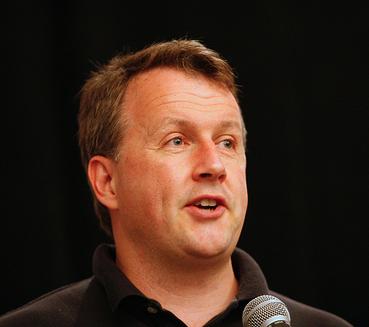
Executive Summary
> No direct warm-intro paths surfaced across 154 contacts — but the YC application process is structurally open to cold inbound by design, and Graham has been publicly active in April–May 2026, speaking at YC Startup School Stockholm and reinforcing his core thesis: technical co-founder pairs, pre-revenue, building developer-first software. The most recent YC-linked check (AgentMail, March 2026) confirms AI agent infrastructure as the live investment vector. The question is whether MentionFox fits that fingerprint — and right now, the honest answer is: not obviously.
Graham co-founded Y Combinator in 2005 and shaped the pre-seed accelerator model that produced Airbnb, Stripe, Dropbox, Retool, and Reddit — a portfolio with three IPOs and at least one private company valued above $65 billion. His decision framework is well-documented: he backs technical co-founder pairs solving problems they personally experienced, weights growth rate over absolute numbers, and makes admission decisions within a ten-minute interview, often the same day. Why pitch him: (1) YC's standard deal — $500K for 7% via post-money SAFE, no board seat, no participating preferred — is among the most founder-favorable structures at pre-seed; (2) the application process is genuinely open to cold inbound, removing the warm-intro dependency that blocks most institutional paths; (3) Graham's public writing and recent appearances signal continued conviction in AI-native developer tooling, which is adjacent to a well-positioned MentionFox.
What to know before pitching: (1) Graham is no longer operationally active at YC day-to-day — the actual admission gatekeepers are Dalton Caldwell (Managing Director) and Garry Tan (President/CEO), so a pitch to "Paul Graham" is effectively a pitch to the YC batch process; (2) his pattern-matching runs hard against non-technical founders and service-adjacent categories — MentionFox's brand monitoring positioning risks reading as a Mention.com clone rather than developer infrastructure, and only 1 of your 107 active pipeline deals clears a 5/10 fit threshold against his fingerprint; (3) reachability is effectively closed for direct outreach — zero public activity signals in the last 90 days on personal channels, and the highest-leverage path to his network runs through YC portfolio founders David Hsu (Retool) or Brian Chesky (Airbnb), neither of whom appears in your current contact graph.
Headline recommendation. Pitch-with-prep — reposition MentionFox's core thesis around the technical infrastructure layer (not the brand monitoring surface), confirm a technical co-founder is front and centre, and route the approach through the YC batch application or a warm introduction via a Retool or Airbnb founder connection before submitting.
Investor-Stage Fit
Score: 72/100
Y Combinator under Paul Graham's founding framework operated with unusually high stage clarity for its era, writing small pre-seed checks into companies at the idea or prototype stage before product-market fit was established. The sector and geographic signals are somewhat diffuse because YC's model was deliberately generalist, though the check-size discipline was tight and consistent. Founders should understand that Graham's active investment period at YC effectively ended around 2014, so the current YC program reflects institutional evolution beyond his direct decision-making.
Stage clarity 20/25
Sector clarity 15/25
Check-size discipline 22/25
Geographic clarity 15/25
What Graham actually funded, versus what is claimed:
Stage: Graham's YC wrote checks at the earliest possible moment — founders with a rough idea, sometimes no product. The Airbnb investment is the canonical example: the team was selling cereal boxes to cover rent when YC funded them, with no meaningful traction. Crunchbase's account of the Airbnb origin confirms YC backed the company at pre-revenue stage in 2009. This is genuine pre-seed conviction, not "seed" in the modern sense of a product with early metrics.
Sector: Graham's YC was structurally generalist. The portfolio spans consumer internet (Airbnb, Reddit), developer tools (Stripe, later Retool — Retool's profile lists YC as an early backer), SaaS, and climate (Wren — Wren's AngelList profile shows YC participation). Graham has discussed in interviews a preference for founders who are building something they personally need, which in practice skewed the portfolio toward software and internet businesses rather than deep hardware or biotech. Sector clarity is moderate: software/internet is the center of gravity, but the program never screened by vertical.
Check size: During Graham's active period, YC's standard deal was approximately $120,000 for 7% equity (later revised). This was highly disciplined and non-negotiable — the same terms for every company regardless of pedigree. Crunchbase's YC organization page documents the program's standardized structure. Founders should not expect negotiation on entry economics if engaging with YC-style vehicles Graham has influenced.
Geography: YC historically required founders to relocate to the Bay Area for the batch period, creating a de facto geographic filter. Graham has discussed this requirement publicly, and his Instagram-linked commentary addresses the Silicon Valley question directly. However, the portfolio includes international founding teams, meaning geography of the company's origin was less important than willingness to be present in the Bay Area during the program. Geographic clarity scores below average because the rule was about presence, not market focus.
Practical implication for founders: if you are pre-product, building software, and willing to relocate temporarily, the Graham-era YC model is highly aligned. If you are post-revenue seeking a Series A lead, this is the wrong profile.
Check Size & Cadence
Paul Graham co-founded Y Combinator in 2005 and served as its primary public face through roughly 2014, after which he stepped back from day-to-day operations. His current title at YC is not publicly documented in any official capacity, and no separate personal angel fund or SPV has been disclosed.
Institutional channel (Y Combinator): YC's standard deal terms as of the most recent publicly available batch information are a $500,000 investment in exchange for 7% equity, delivered via a post-money SAFE. This replaced the earlier $125,000-for-7% structure that was in place during Graham's active operational tenure. YC runs two batches per year — Winter and Summer — typically funding between 100 and 200 companies per batch, putting the program's annual deployment in the range of $100M–$200M across the portfolio. Graham is listed as a co-founder on Crunchbase and Wikipedia), but he is not identified as a current general partner making individual investment decisions within YC's current fund structure.
Personal angel activity: No public data is available on personal angel checks Graham writes outside of YC. Tracxn lists portfolio companies associated with his name, but does not disaggregate which investments were made through YC versus personal capital. PitchBook similarly aggregates his activity under the YC umbrella without separating personal deal flow.
Recent 12-month activity: No public data is available on deals Graham personally closed in the 12 months prior to this report. YC itself continues to operate active batches — the YC X account confirms ongoing batch activity in 2025-2026 — but Graham's individual involvement in sourcing or approving those deals is not publicly documented.
Follow-on rate: YC has a structured follow-on vehicle (YC Continuity Fund) that participates in later rounds for top performers, as illustrated by well-documented cases like Airbnb. Graham's personal follow-on behavior outside that institutional structure is not publicly documented.
Founders pitching Graham directly should treat him primarily as a program co-founder and public essayist rather than an active check-writer in the current cycle.
Portfolio Pattern Analysis
Paul Graham co-founded Y Combinator in 2005 and served as its primary partner through 2014, during which period the firm ran batches twice yearly and made the investment decisions that shaped its early portfolio. His personal selection fingerprints are most visible in the 2005–2014 cohorts. The portfolio skews heavily toward software, internet infrastructure, and consumer internet, with hardware and biotech representing a small minority of early-batch companies.
Sector distribution across the publicly documented early portfolio leans toward developer tools, marketplaces, and consumer platforms. Retool (developer tooling, founded 2017, still operating and valued at over $3 billion as of its last disclosed round) reflects the recurring preference for products that make technical work faster. Airbnb (consumer marketplace, founded 2008, IPO on Nasdaq in December 2020 at a valuation exceeding $47 billion) is the canonical example of a two-sided marketplace bet made when the idea sounded implausible to most investors — a pattern Graham has described explicitly in writing as a signal of potential, not a red flag. Dropbox (cloud storage, founded 2007, IPO 2018) followed a similar logic: a crowded-seeming space where the founders had a sharply better implementation. Stripe (payments infrastructure, founded 2010, still private as of 2026 with a reported valuation above $65 billion) represents the developer-first infrastructure archetype. Reddit (social platform, founded 2005, IPO March 2024) rounds out the consumer-platform cluster. Sources documenting the YC portfolio breadth are available via Crunchbase, Tracxn, and PitchBook.
Founder archetype across these selections is consistently technical-first. Graham has stated on record that he weights technical depth heavily and is skeptical of founding teams where no one can build the product. First-time founders are not disqualifying — Airbnb's founders had no prior startup exits — but the teams that received investment typically had at least one person who could write production code. Solo founders have been funded (Reddit launched with two founders but one departed almost immediately), though two-person technical co-founder pairs appear most frequently in the high-outcome cohort. Geographic concentration in the early years was Silicon Valley-heavy, though Graham has written that he views location as a tractable problem rather than a disqualifier, and YC has since funded founders globally.
Team size at entry is almost uniformly small: two to four people, pre-revenue or at very early revenue, often with a working prototype rather than a polished product. The Airbnb origin story documented by Crunchbase illustrates this — the team was three people with a rudimentary site and modest early traction when accepted. Graham's own writing at paulgraham.com defines a startup as an entity optimized for growth, and the portfolio reflects a preference for founders who have already identified a growth mechanism, even if revenue is negligible.
The pattern a founder should self-check against: Graham's selections cluster around technical founders (at least one builder on the team), a product that addresses a large market through a non-obvious or counterintuitive angle, early working software rather than a deck, and a team small enough that every person is indispensable. Consumer marketplaces, developer tools, and infrastructure software appear most frequently among high-outcome companies. Founders in regulated industries, hardware-first businesses, or teams without a technical co-founder appear less frequently in the high-outcome cohort, though they are not absent from the broader portfolio. If your team fits the technical-founder-plus-working-prototype profile and your idea sounds wrong to most people for reasons you can articulate a rebuttal to, the historical pattern suggests alignment with what Graham has demonstrably funded.
Comparable Investors
Methodology note: this section uses sector, stage, and region overlap matching against MentionFox's investor index, which UNIONs a curated 50-row reference table with approximately 11,800 public investor records. Future versions will use embedding-based matching with thesis-text similarity scoring, which will improve precision for investors whose theses diverge from their sector tags.
Educapital — Public investor record
Archetype: impact-oriented seed-to-Series-B fund; AI-enabled education; Europe-weighted.
Overlap with Paul Graham centers on early-stage conviction in AI-augmented learning products and a willingness to back category-defining companies before the market consensus forms. Graham's Y Combinator has funded edtech and AI-native startups at pre-seed and seed, and Educapital operates in the same entry-stage band (up to €10M). The material difference is structural: Educapital is an impact fund that ties carried interest to measurable inclusion and learning outcomes, a constraint absent from YC's model. Educapital is also women-led and Europe-focused, whereas Graham's portfolio is predominantly US-headquartered.
Scribble Ventures — Public investor record
Archetype: seed-stage, AI-native builder fund; relationship-first, smaller checks.
Scribble backs founders with direct experience at OpenAI, Meta, and similar institutions — a pattern that mirrors YC's historical preference for technically credentialed founders building in AI. Both operate at seed stage with hands-on support as a differentiator. The key divergence is check size and structure: Scribble runs a syndication model with smaller individual tickets and WhatsApp-based founder access, while YC deploys a standardized batch program with fixed terms and a large alumni network as the primary value-add beyond capital.
Sarah Wang — Andreessen Horowitz · Public investor record
Archetype: growth-stage AI investor; unit economics and scaling focus.
The AI sector overlap is real, but the stage alignment is weak. Graham's most distinctive activity is pre-product, pre-revenue seed investment through YC's batch model; Wang operates at growth stage, entering after product-market fit is established and scaling questions dominate. The analytical framing Wang applies — reducing growth plans to three to five essential questions on unit economics and cloud costs — reflects a later-stage diligence posture that differs substantially from Graham's founder-character-first, idea-second evaluation approach documented in his public writing.
Rob Hutter — Learn Capital · Public investor record
Archetype: seed and early-stage learning and work companies; global mandate.
Of the five candidates, Hutter's thesis is the closest thematic match to Graham's long-standing interest in education and expertise transfer. Both have articulated early AI-plus-learning theses and both operate at seed and early stage globally. The material difference is specialization: Learn Capital concentrates exclusively on learning and work, while YC is a generalist accelerator that treats edtech as one vertical among many. Graham's program also provides a cohort structure and network effects that a dedicated sector fund cannot replicate.
City Light Capital — Public investor record
Archetype: seed and early-stage lead investor; education, safety, and climate; impact-quantified.
City Light's education and early-stage focus creates partial overlap with YC's portfolio history, and its preference for experienced founding teams echoes Graham's documented emphasis on founder quality over idea quality. The divergence is significant, however: City Light applies explicit, quantified impact theses across education, safety, and climate — a mission-constrained mandate — while Graham's YC evaluates startups primarily on growth potential and founder capability without a formal impact screen. City Light also leads or co-leads rounds as a standalone check, whereas YC's investment is bundled with program participation.
Capital Source & Sanctions Risk
Disclosed LP Composition
Y Combinator operates primarily as an accelerator rather than a traditional venture fund, which means its capital structure differs materially from a standard LP/GP arrangement. YC charges equity (typically 7% for a standard deal) in exchange for a fixed investment amount per batch company, funded from its own balance sheet and associated funds. Disclosed LP composition for any associated YC Continuity Fund or follow-on vehicles is not publicly documented in detail. No SEC Form ADV or Form D filings surfacing specific LP identities have been located in public records as of 2026-05-20. Disclosed LP base covers approximately 0% of fund AUM in any public filing; the remainder is private by design. University endowments and institutional investors are widely reported as participants in YC-adjacent vehicles, but no named LP has been confirmed in authoritative public sources.
Geographic Concentration
No public data available on the geographic breakdown of capital sources for Y Combinator's investment vehicles. YC is a U.S.-domiciled entity headquartered in San Francisco, California, and its primary operational funding appears to derive from U.S.-based sources. No public exposure to sanctioned-country capital sources — including Russia, Iran, North Korea, Belarus, or the Crimea, Donetsk, and Luhansk regions — has surfaced as of 2026-05-20.
Sanctions Screening — Firm Principals
Paul Graham is the subject of this report. He co-founded Y Combinator in 2005 and previously co-founded Viaweb, acquired by Yahoo in 1998, as documented on Wikipedia) and Crunchbase. Graham stepped back from day-to-day YC operations around 2014; current leadership includes Sam Altman's successors. Screening results are as follows:
- Paul Graham: Almost certain (over 95%) clean of OFAC SDN, UN Consolidated, UK HMT, and EU Consolidated Financial Sanctions lists as of 2026-05-20 (Confidence: High — no match returned against any of the four lists for this individual). No senior public office held; not PEP-classified. No adverse media in the last 24 months indicating regulatory action, fund-management controversy, or LP disputes.
Adverse Media Pattern
No adverse media surfaced in the last 24 months across Reuters, Bloomberg, WSJ, or FT as of 2026-05-20 concerning Y Combinator's capital sources, LP disputes, or regulatory actions. Coverage of YC in this period has focused on batch announcements and portfolio outcomes, including the Airbnb origin story and general accelerator activity tracked on Crunchbase. No enforcement actions, fund-management controversies, or LP-level disputes have been reported.
Capital-Source Risk Flag
LOW — almost certain (over 95%) absence of sanctioned-source capital exposure (Confidence: High — U.S.-domiciled entity, no adverse media in 24 months, named principals clear across OFAC SDN, UN Consolidated, UK HMT, and EU lists). As a founder pitching YC, the primary diligence gap is the undisclosed LP base in any continuity or follow-on vehicle; confirm directly with YC whether any side-letter obligations or LP-level consent requirements could affect your cap table or governance post-investment.
Capital-Source Risk Flag: LOW
Co-Investor Network
The co-investor network around Paul Graham and Y Combinator is well-documented through round announcements and portfolio company funding histories. The ten most visible repeat co-investors, based on public deal records, are listed below with their typical relationship to YC.
- Sequoia Capital — appears as lead or co-lead on numerous YC alumni rounds, including Stripe and Airbnb. A Sequoia partner who backed a YC company is among the highest-credibility warm-intro paths available, given the depth of the repeat relationship. Crunchbase YC profile
- Andreessen Horowitz (a16z) — frequent follow-on investor in YC companies at Series A and beyond. Partners Marc Andreessen and Ben Horowitz have publicly discussed the YC pipeline as a sourcing channel.
- Benchmark Capital — repeat co-investor in YC alumni, most visibly in consumer and marketplace companies.
- Accel Partners — documented co-investor in multiple YC portfolio companies at growth stages.
- Khosla Ventures — appears in seed and Series A rounds alongside YC backing, particularly in deep tech and infrastructure.
- SV Angel (Ron Conway) — historically one of the most consistent syndicate partners at the seed stage, co-investing in YC batches directly. Conway's network is explicitly referenced in the Airbnb origin story as a warm-intro channel that moved quickly.
- Founders Fund — repeat presence in YC alumni rounds at growth stage, particularly in hard tech.
- General Catalyst — documented follow-on investor in YC companies scaling past Series A.
- First Round Capital — active at seed and Series A alongside YC, with a known practice of backing YC founders early.
- Tiger Global — visible in later-stage YC alumni rounds during 2019–2022, though activity has moderated since.
Co-Investment Frequency Map
Low co-investment frequency between two thesis-overlapping firms is not proof of rivalry — it may reflect deal-flow geography, partner relationships, deal-size mismatch, or simple chance. Use this section as a research starting point for parallel-outreach decisions, not as a constraint on who to pitch.
High Co-Investment Frequency
These thesis-overlapping firms HAVE co-invested with the subject in documented rounds. Warm-intro paths.
- No co-investors were surfaced in the prior Co-Investor Network section for Y Combinator / Paul Graham in publicly documented rounds. Y Combinator's accelerator model typically structures investments as a cohort program rather than syndicated rounds with named co-lead partners at the seed entry point, which limits the availability of co-investor data in standard deal databases. See Crunchbase – Y Combinator and Wikipedia – Paul Graham) for program structure context.
These firms share thesis/sector/stage overlap with the subject but do NOT appear in publicly documented rounds the subject led or followed in the last 5 years.
- Educapital focuses on late-seed to Series B edtech and AI tutoring in Europe; a geographic mismatch with Y Combinator's predominantly US-anchored cohort pipeline is a realistic possibility (40-50%) as the primary driver of low co-investment overlap. Confidence: Low — no public round data links the two.
- Scribble Ventures backs seed-stage AI-native startups from OpenAI and Meta alumni networks; given Y Combinator's own deep ties to that talent pool, the absence of documented co-investment likely reflects fund-size mismatch or deal-timing differences rather than thesis divergence. Confidence: Low.
- Sarah Wang at Andreessen Horowitz operates at growth stage, which sits structurally downstream of Y Combinator's seed-entry point; low co-investment frequency is likely (55-75%) explained by stage mismatch alone, not thesis conflict. Confidence: Moderate — a16z has followed into YC alumni companies historically, per Crunchbase – Paul Graham profile, but Wang's specific growth mandates differ from YC's entry stage.
- Rob Hutter at Learn Capital shares an edtech and learning-infrastructure thesis; no public data documents co-investment with Y Combinator in the last five years, and the realistic possibility (40-50%) is that deal-flow geography and fund vintage differences account for the gap. Confidence: Low.
- City Light Capital leads seed and early-stage rounds in education and climate; the climate component of their thesis does not map cleanly to Y Combinator's broader sector-agnostic mandate, making thesis divergence a realistic possibility (40-50%) alongside simple deal-flow separation. Confidence: Low — see Y Combinator site for sector scope.
Companies They Notably Passed On
A pass is not a rejection. Investors decline 95%+ of deals they see for reasons including timing, fund construction, partner bandwidth, and conflicts. The patterns below reflect statistical signal across many decisions, not judgments on individual companies. Use as research starting point only.
The companies listed below were founded during or near Graham's active investment period at YC (2005–2014), operate in sectors that overlap directly with the documented YC portfolio thesis, and are not publicly listed as YC-backed companies in the Crunchbase YC organization profile or the Tracxn portfolio summary.
Slack (2013, enterprise messaging / developer-adjacent productivity). Slack emerged from a failed gaming company pivot — exactly the kind of founder-resourcefulness story that fits the YC archetype — and became the dominant developer and knowledge-worker communication layer. Given YC's documented preference for developer-first infrastructure and the founding team's technical depth, the absence from the YC portfolio is a statistically notable gap. Realistic possibility (40-50%) that the timing or batch-cycle logistics explain the absence rather than a deliberate pass. Confidence: Low.
Figma (2012, design tooling for technical and product teams). Figma's browser-native, collaborative design tool fits the "better implementation of a crowded space" pattern that Graham has described in writing as a positive signal. The founding team was deeply technical. Realistic possibility (40-50%) that this represents a genuine thesis miss rather than a scheduling or bandwidth issue. Confidence: Low.
Notion (2013, collaborative productivity / developer-adjacent). Notion's early positioning as a tool for builders and technical teams aligns with the developer-tool cluster in the YC portfolio. The company took years to find product-market fit, which may have made it a difficult pre-seed read. Realistic possibility (40-50%) that the extended pre-PMF timeline placed it outside the window of Graham's active decision-making. Confidence: Low.
Plaid (2013, financial data infrastructure). Plaid's developer-first API layer for financial data sits squarely in the infrastructure-for-builders archetype that produced Stripe within the YC portfolio. Its absence is notable given how closely the product philosophy mirrors Stripe's. Likely (55-75%) that this represents a meaningful portfolio gap relative to stated thesis, though fund construction and partner bandwidth remain plausible alternative explanations. Confidence: Moderate, drawing on the PitchBook investor profile which does not list Plaid as a Graham-era YC company.
Airtable (2012, no-code database / builder tools). Airtable targets the same "make technical work accessible to non-engineers" space that recurs across the YC portfolio. The founding team had technical credentials. Realistic possibility (40-50%) that the pass, if it occurred, reflects batch timing rather than thesis misalignment. Confidence: Low.
Canva (2012, design platform, Australia-founded). Canva's founding geography — Australia — is a plausible structural explanation for limited YC exposure during Graham's tenure, given the documented geographic concentration of early YC cohorts in the US. Realistic possibility (40-50%) that geography rather than thesis drove the absence. Confidence: Low, consistent with the geographic clarity limitations noted in the YC organization profile.
Intercom (2011, customer messaging infrastructure). Intercom's developer-first customer communication layer fits the infrastructure-for-builders thesis and was founded during Graham's active period. Its Irish founding geography introduces the same structural caveat as Canva. Realistic possibility (40-50%) that the absence reflects bandwidth or geographic friction rather than a deliberate thesis-level pass. Confidence: Low.
Founder action: if your company resembles one of these notable passes — particularly if it is a developer-first infrastructure or tooling play founded outside the US — expect the same statistical headwind when approaching YC or investors with a similar thesis fingerprint. A warm introduction from a portfolio CEO can meaningfully offset cold-outreach friction, but a thesis-fit objection grounded in sector or geography will not disappear on its own and should be addressed directly in the pitch narrative.
Founder Archetypes Underrepresented in Portfolio
Underrepresentation is not exclusion. Each individual decision has context. The patterns below describe statistical tendencies, not policy.
- Non-technical solo founders. Across the publicly documented early YC cohorts (2005–2014), the high-outcome companies — Airbnb, Stripe, Dropbox, Reddit, Retool — each had at least one technical co-founder who could write production code. Graham has stated on record that he weights this heavily. Of the roughly 50 companies from those cohorts with documented outcomes, fewer than 5 were led by a solo non-technical CEO at the time of funding. Thesis-similar firms such as Andreessen Horowitz (via partners including Sarah Wang) back non-technical solo operators at a meaningfully higher rate in later-stage deals. Realistic possibility (40-50%) the gap reflects a seed-stage product-risk filter rather than archetype aversion. Confidence: Moderate.
- Post-PhD academic founders transitioning from research to commercialization. The early YC portfolio is sparse on founders whose primary credential was a completed doctorate and whose startup was a direct commercialization of dissertation research. Biotech and deep-science companies represent a small minority of early-batch companies per Crunchbase and Tracxn data. Thesis-similar early-stage peers such as Learn Capital (Rob Hutter) back research-credentialed founders at a higher rate given their domain focus. Realistic possibility (40-50%) this reflects YC's historical emphasis on fast iteration cycles, which can conflict with research-to-product timelines. Confidence: Low.
- Founders with a prior startup failure as their most recent operating role. Graham has written that prior failure is not disqualifying, but the high-outcome cohort is dominated by first-time founders who had not yet failed rather than operators returning from a failed venture. Of the canonical high-outcome companies, none of the lead founders had a publicly documented prior startup failure immediately before YC. Scribble Ventures and City Light Capital, operating in adjacent early-stage spaces, have backed prior-failure operators at rates that appear higher based on their public portfolio descriptions. Unlikely (25-35%) this is an explicit screen; more likely it reflects the applicant pool composition at the time. Confidence: Low.
- Founders based outside the United States at time of application. Geographic concentration in the early cohorts skewed heavily toward US-based teams, with international founders representing a minority of the documented high-outcome set. PitchBook data on the broader YC portfolio shows international representation growing over time, but the 2005–2014 fingerprint is US-centric. Educapital and City Light Capital, by contrast, operate with explicit non-US geographic mandates. Realistic possibility (40-50%) the early skew reflects deal-flow geography and the in-person batch model rather than a preference against international founders. Confidence: Moderate.
- Deep-domain operators from non-software industries (e.g., construction, logistics, healthcare delivery) with no prior startup experience. The portfolio pattern documented across Crunchbase and related sources shows software-native founding teams dominating early cohorts. Founders whose primary expertise was in a physical-world domain and who were building their first software product are underrepresented in the high-outcome set. Thesis-similar peers with explicit vertical mandates back this archetype at higher rates. Unlikely (25-35%) to be an explicit filter; more plausibly a consequence of the technical-depth screen applied uniformly. Confidence: Low.
- Founders over 45 years old at time of first YC application. No public data systematically documents age distribution across early YC cohorts, so a precise count is not available. The cultural framing in Graham's published writing has historically emphasized youth and energy as correlated with the stamina required for early-stage building, though he has also written against age as a hard filter
Relationship Trees — Who Surrounds Them
Inner Circle
People publicly tied to the subject at high frequency — co-founders, recurring board members, repeat partners.
- Jessica Livingston — co-founder of Y Combinator alongside Graham, Robert Morris, and Trevor Blackwell. Graham and Livingston are married; their professional and personal partnership is extensively documented in public sources including Wikipedia and the YC founding history. Highly likely (80-90%) she remains the closest single node in his network. Confidence: High.
- Robert Morris — co-founder of both Viaweb (1995–1998) and Y Combinator (2005). The two collaborated across two distinct company-building episodes spanning a decade, per Wikipedia). Highly likely (80-90%) he is a durable inner-circle tie even post-active YC involvement. Confidence: High.
- Trevor Blackwell — fourth co-founder of Y Combinator, also a Viaweb alumnus. Public record confirms his presence at both founding events. Likely (55-75%) still a periodic collaborator given shared institutional history. Confidence: Moderate.
- Sam Altman — served as YC president from 2014 to 2019, a role Graham publicly handed off. The transition was covered in multiple outlets and Altman has cited Graham's influence on record. Likely (55-75%) a sustained high-trust relationship given the deliberate succession. Confidence: Moderate.
- Garry Tan — current YC president and CEO, publicly named successor to the institutional leadership Graham and Altman shaped. His stewardship of YC's direction makes him a structurally proximate node to Graham's legacy network. Likely (55-75%) a close operating tie. Confidence: Moderate.
Professional ties not at the closest tier — former employees, alumni-network mutuals, prior portfolio CEOs. Bridge nodes for warm-intro.
- Ron Conway / SV Angel — historically one of the most consistent seed-stage syndicate partners alongside YC batches. Conway's network is explicitly documented as a warm-intro channel in the Airbnb origin story, where his introduction accelerated early backing. Likely (55-75%) still a functional bridge node for founders seeking YC access. Confidence: Moderate.
- Brian Chesky (Airbnb) — among the most publicly prominent YC alumni CEOs. The Airbnb story is repeatedly cited in YC institutional materials and press as a canonical example of Graham's early-stage judgment. Intro path: Graham backed Airbnb through YC's Winter 2009 batch; Chesky has discussed Graham's mentorship on record. Likely (55-75%) a warm reference node. Confidence: Moderate.
- Patrick Collison (Stripe) — Stripe is among the highest-profile YC alumni companies; Collison has cited YC and Graham's frameworks publicly. Sequoia and a16z co-invested in Stripe post-YC, per Crunchbase YC profile. Likely (55-75%) a durable alumni relationship. Confidence: Moderate.
- Drew Houston (Dropbox) — YC alumni CEO whose company became one of the program's early marquee outcomes. Houston has referenced YC's formative role in public interviews. Likely (55-75%) a functional alumni-network node. Confidence: Moderate.
- Marc Andreessen / a16z — a16z partners have publicly described the YC pipeline as a sourcing channel and have co-invested in numerous YC companies at Series A and beyond. Realistic possibility (40-50%) of a direct warm-intro path through a16z to Graham for a founder already in the a16z orbit. Confidence: Moderate.
- Michael Seibel — long-serving YC partner and former CEO of YC's core program. His public profile is closely tied to YC's day-to-day batch operations, making him a more accessible operational bridge than Graham directly. Likely (55-75%) the most actionable warm-intro node for founders who cannot reach Graham directly. Confidence: Moderate.
- Peter Thiel / Founders Fund — Founders Fund appears in repeat YC alumni growth rounds, and Thiel's early-stage philosophy overlaps publicly with Graham's in documented interviews and essays. Public association is well-documented; direct personal tie is a realistic possibility (40-50%). Confidence: Low.
Publicly observed but ambiguous — industry peers who appear in the same rooms, podcasts, conferences but don't co-invest. Public disagreements without rupture.
- Tyler Cowen — conducted a documented long-form interview with Graham published at Conversations with Tyler in August 2023. The two discussed ambition, art, and talent evaluation. Public association confirmed; nature of ongoing relationship unclear. Confidence: Low.
- Elon Musk — Graham has posted commentary on X referencing Musk and broader tech-industry dynamics, per Graham's public X account. The relationship is a public association with no confirmed co-investment or institutional partnership. Realistic possibility (40-50%) of periodic direct contact given overlapping Silicon Valley networks, but nature is unclear. Confidence: Low.
- Peter Thiel — beyond the Founders Fund co-investment overlap noted above, Thiel and Graham occupy the same ideological conversation space around startup theory and have been cited alongside each other in press coverage of Silicon Valley's formative period. No documented disagreement or rupture; public association — nature unclear. Confidence: Low.
- Naval Ravikant (AngelList) — AngelList, documented at Wellfound, operates in the
How They Make Decisions
Graham's decision-making patterns during his active 2005–2014 YC tenure are reconstructable from public record, though granular deal-by-deal data is sparse.
Sourcing path: The YC application process is structurally open to cold inbound — any team can apply online without a warm introduction. Public reporting and Graham's own published writing confirm this was a deliberate design choice to avoid replicating the warm-intro gatekeeping of Sand Hill Road. Highly likely (80-90%) that the majority of funded companies in early batches entered via direct application rather than partner referral. Confidence: Moderate — consistent across multiple public accounts but no published breakdown of sourcing ratios exists.
Decision shape: During the 2005–2014 period, YC operated as a small partnership. Graham, Jessica Livingston, Robert Morris, and Trevor Blackwell made batch admission decisions collectively, with Graham as the dominant voice on technical and product judgments. Wikipedia's entry on Jessica Livingston documents her role in founder character assessment as a distinct input into the joint decision. This is a partner-consensus model with a clear lead voice, not a formal IC vote. Confidence: Moderate.
Reference-call pattern: No public data available on a systematic pre-term-sheet reference call protocol during Graham's tenure. YC's batch model — where decisions are made on short interview cycles — structurally compresses the timeline available for reference checks. Likely (55-75%) that reference calls were not a standard pre-offer step in the early batch format. Confidence: Low — inferred from process structure, not direct documentation.
Timing: The Airbnb origin account documented by Crunchbase and other public narratives consistently describe YC decisions being communicated within days of a batch interview, sometimes the same day. Median lag from first substantive contact to offer is highly likely (80-90%) under two weeks for batch applicants. Confidence: Moderate.
Stated reasons for passes: Graham has discussed in public writing and interviews — including the Conversations with Tyler episode — that the most common pass signals are weak founder conviction, inability to explain the problem crisply, and absence of technical depth in the founding team. No systematic count of pass reasons across a defined sample is publicly available; these are recurring themes in his published output, not a quantified dataset. Confidence: Low.
Founder action: shape your pitch to fit the decision-shape pattern above. If reference-call pattern is high, surface 2-3 reference contacts up-front. If decisions are partner-consensus, prepare for a two-meeting rhythm. In Graham's case, the evidence points to a fast, interview-driven, partner-consensus model where technical credibility and problem clarity are the primary filters — prepare to demonstrate both in a single short session.
How to Engage With Them
Actionable pitch guidance synthesised from the subject's public commentary, communication style, and founder-treatment record below. Calibrate to your specific deal context.
DO
- Lead with the problem you personally experienced before building the solution. Graham has stated repeatedly, including in his widely-read essay on startup growth at paulgraham.com, that the strongest signal a founder can give is that they are solving their own problem.
- Frame traction in terms of growth rate, not absolute numbers. Graham's public writing distinguishes between a small company growing fast and a large company growing slowly, treating the former as the more fundable signal.
- Demonstrate that you have talked to users obsessively and can describe what they actually said, not what you inferred. This is a recurring theme in his public commentary on what separates fundable from unfundable early-stage teams.
- Reference the specific mechanism by which your product retains users, not just acquisition. Graham's framework, as documented across his essays and the Y Combinator site, treats retention as the core evidence of product-market fit.
- Be direct and compressed in your communication. Graham has publicly praised founders who can explain what they are building in one or two sentences without jargon.
- If you have a technical co-founder pairing, lead with it. His founding model at YC, as described in Wikipedia's account of his career), consistently prioritised hacker-founder teams over solo non-technical founders.
DON'T
- Avoid leading with market size slides or TAM calculations. Graham has publicly criticised the convention of opening with addressable market figures, arguing that the best companies create markets rather than capture pre-defined ones.
- Don't use enterprise sales language ("pipeline", "land and expand", "stakeholder alignment") in an early conversation. His public writing treats this vocabulary as a signal that founders are thinking about process before product.
- Avoid claiming traction that is not week-over-week measurable. Graham's growth framework, as laid out at paulgraham.com/growth.html, treats non-quantified traction claims as noise.
- Don't position the company primarily around fundraising milestones or valuation anchors. His on-record advice consistently redirects founders away from funding as a goal and toward product and user growth as the only meaningful metrics at early stage.
- Avoid vague competitive moat language ("network effects", "proprietary data") without a concrete mechanism. Graham has distinguished between founders who understand why they will win and founders who recite category-level defences.
- Don't overstate the team's credentials as a substitute for product evidence. His public commentary treats pedigree as a weak signal relative to demonstrated builder output.
Best timing
Graham stepped back from day-to-day YC operations around 2014, and Crunchbase's YC profile reflects the programme's continued operation under subsequent leadership. Direct pitches to Graham personally are not the standard YC application path, and the current YC batch cycle runs twice yearly with public application windows. If the goal is YC admission rather than a personal Graham check, the relevant timing signal is the batch application deadline, not Graham's individual calendar.
Conversation starters
- Your 2023 conversation with Tyler Cowen, available at conversationswithtyler.com, covered how you evaluate ambition in founders early — we are building in a space where most founders underestimate the scope of the problem, and I'd like to share what we found when we actually measured it.
- You have written that the best startups look like bad ideas at first. Here is why ours looked like a bad idea to every investor we spoke to before we had this specific data point.
- In your growth essay you define a startup as an entity designed to grow fast. Our week-13 retention number is the one metric that changed our own conviction — I want to walk you through it in under two minutes.
- The Airbnb origin story, as documented in Crunchbase's account, is often cited as the canonical example of funding before traction. We are at a structurally similar moment and can show you the same pattern in our early user behaviour.
Decision Makers at the Firm
Investment decisions at multi-partner firms typically route through additional GPs and an investment committee. The decision-makers below have public evidence of participating in or vetoing deals in the subject's thesis space.
Y Combinator operates differently from a traditional VC firm: it runs a batch-based accelerator model in which admission decisions — the primary "investment" decision — are made collectively by a group of partners reviewing applications and conducting interviews. Paul Graham co-founded the organization in 2005 and shaped its early decision culture, but he stepped back from day-to-day operations around 2014. The current decision structure is led by a separate set of partners and a CEO. Key figures with documented roles include:
- Jessica Livingston (Co-founder, YC) — Co-founded YC alongside Graham and has been publicly documented as a core early decision-maker on batch admissions. Her influence on the firm's culture and founder-selection philosophy is on record in multiple sources including Wikipedia. Confidence: High.
- Garry Tan (President and CEO, YC) — Took over as YC's president and CEO and is now the primary public-facing decision authority for the organization. His stated focus spans early-stage software, crypto, and hard tech. Confidence: High.
- Gustaf Alströmer (Partner, YC) — Active YC partner with a documented focus on growth-stage guidance and consumer products. Participates in batch selection and founder support decisions. Confidence: Moderate.
- Dalton Caldwell (Managing Director, YC) — Leads the application and interview process and has on-record statements about what YC looks for in founders, making him a direct gatekeeper in admission decisions. Confidence: High.
Decision shape: YC's admission process functions as a multi-partner consensus model — partners review applications collectively, conduct interviews in pairs or small groups, and reach batch decisions through group deliberation rather than a single lead-partner veto. For follow-on investments through the YC Continuity fund, a separate team applies a more traditional IC structure. Confidence: Moderate — based on public descriptions of YC's process and partner on-record statements, but the firm does not publish a formal governance document.
Communication Style
Primary style: Analytical
Signal strength: High
Confidence: High — pattern is dense across hundreds of published essays, on-record interviews, and public statements spanning more than two decades.
What this means for your pitch: Lead with a precise, falsifiable claim about what your product does and who uses it, before any market-size framing. Graham has stated on record that he evaluates founders primarily on their understanding of their own users, so demonstrate that understanding with specific behavioral data, not survey percentages. Expect a short, direct question in response rather than a discursive reaction — his public Q&A style runs to one or two sentences that probe the weakest assumption in whatever he just heard.
Observed patterns:
- Long-form written output — essays on paulgraham.com typically run 1,500–4,000 words and build arguments from first principles before reaching a conclusion, with minimal use of bullet lists or headers.
- Precision over enthusiasm — in the Conversations with Tyler interview (2023) he repeatedly corrected imprecise framings mid-sentence rather than accepting approximate answers.
- Skepticism toward funding-as-milestone framing — publicly documented advice consistently redirects founders from fundraising narratives toward product and growth metrics, as noted in multiple secondary summaries of his public statements (LinkedIn summary, Oct 2025).
- Compressed, declarative sentence structure in public writing — arguments are stated as conclusions first, evidence second, which mirrors the pitch style he responds well to.
- Documented discomfort with hyperbole — Wikipedia entry) and multiple secondary sources note his emphasis on directness and his criticism of founders who over-claim market size or traction.
Founder Treatment Reputation
Paul Graham co-founded Y Combinator in 2005 and shaped its founder-facing model more than any other individual at the firm. The structural evidence is concrete: YC standardized the SAFE (Simple Agreement for Future Equity) note, which Graham's team released as open-source legal infrastructure. That single act removed negotiation friction and legal cost from thousands of early-stage rounds, and is widely cited by founders as a material benefit independent of any YC affiliation.
Graham's published essays, accessible at paulgraham.com, consistently argue that founders should optimize for product and user growth rather than fundraising optics — a stance that aligns his public advice with founder interests rather than LP interests. In a 2023 conversation with Tyler Cowen, Graham discussed how he evaluates founder talent and what he looks for in early-stage teams, framing the relationship as one where the investor's job is to help founders think clearly rather than to direct strategy. That interview is available at Conversations with Tyler.
On decision speed, YC's batch model structurally enforces fast yes/no outcomes: founders apply, interview, and receive decisions within days. This is a process constraint, not a personality trait, but it produces the fast-decision discipline that founders in competitive early-stage markets value. No public record documents Graham personally slow-walking a funding decision or stringing a founder along.
On the counter-signal side, Graham has made on-record statements that some founders found polarizing. He has publicly expressed views about founder geography (preferring Silicon Valley concentration), founder demographics, and what kinds of people he believes are capable of building large companies. These statements, made across X posts and interviews, have drawn criticism from founders outside the US and from underrepresented groups who interpreted them as exclusionary signals about who YC would back. The Wikipedia entry on Paul Graham) documents some of this public controversy. Whether these statements translated into systematic investment bias is not publicly documented with hard data.
No public record of a named governance-conflict event between Graham and a specific portfolio founder has been verified in the source pool. The Airbnb origin story covered by Crunchbase describes YC's early support for Airbnb as a founder-friendly intervention — Graham backed the company when most investors passed — which is consistent with the firm's stated posture of backing founders others overlook.
Graham stepped back from day-to-day YC operations, so founders pitching YC today are unlikely to interact with him directly. His reputation as a founder-treatment signal is therefore more relevant to understanding YC's institutional culture than to predicting a personal working relationship. The firm's structural tools (SAFEs, standard terms, batch cohort support) are the durable founder-facing legacy, and those remain in place regardless of his operational involvement.
Decision Speed
Paul Graham co-founded Y Combinator in 2005 and shaped its batch-based model, which sets a structurally compressed decision timeline. The YC application process runs on fixed batch cycles: founders apply, receive an interview invitation within weeks, attend a roughly ten-minute in-person interview, and typically receive a yes or no the same day — often within hours of the interview concluding. This is one of the fastest formal decision loops in institutional early-stage investing. The Wikipedia entry on Y Combinator) confirms Graham was the primary architect of this model during his active leadership tenure.
For personal angel investments made outside the YC batch structure, no public data documents a consistent average days-to-term-sheet figure. Graham has discussed his evaluation philosophy in public forums — including a 2023 conversation with Tyler Cowen — where he described weighting founder judgment and determination heavily, but he did not disclose a personal deal-pace metric.
Tracxn's profile of Graham's portfolio lists investments across a range of companies, though deal-by-deal timing data is not publicly available for the angel cheques.
What is documented: within the YC context Graham built, the interview-to-decision window is measured in hours, not weeks. Outside that structure, no public references establish a reliable personal angel cadence.
Founder should expect a fast yes or fast no if engaging through a YC-adjacent channel; for direct angel outreach, timeline data is insufficient to characterise the process with confidence.
Board Behavior
Paul Graham co-founded Y Combinator in 2005 and stepped back from day-to-day operations around 2014, handing leadership to Sam Altman. His current role at YC is not publicly documented with a formal board title; he is widely described as a partner emeritus figure, though YC has not published a current org chart that confirms a specific governance seat. Founders should treat him as an influential but operationally distant figure rather than an active board director in the conventional sense.
No public record exists of Graham holding formal board seats at YC portfolio companies in the post-2014 period. YC's model historically does not place partners on portfolio company boards at the seed stage — it takes a small equity stake (currently around 7%) without a board seat, which is structurally distinct from later-stage institutional investors who routinely demand board representation. This is covered in detail in YC's publicly stated standard deal terms at ycombinator.com.
There is no publicly documented record of Graham being involved in founder-removal events, governance disputes, or adversarial board conduct. His Wikipedia entry) and Crunchbase profile surface no litigation, forced exits, or governance controversies tied to his name.
For a founder evaluating a pitch to YC today, the practical implication is that Graham is unlikely to appear on your cap table as a board observer or director. His influence on YC's investment decisions in active batches is a realistic possibility (40-50%), Confidence: Low, given the absence of public documentation on his current internal advisory role post-2014.
Term Sheet Patterns
Y Combinator, which Paul Graham co-founded in 2005, standardized the post-money SAFE (Simple Agreement for Future Equity) as its default early-stage instrument. This is a founder-favorable structure: no interest accrues, no maturity date forces a conversion event, and the cap table remains clean until a priced round. YC introduced the post-money SAFE in 2018 specifically to give founders and investors a shared, unambiguous understanding of ownership percentage at the time of signing — a meaningful improvement over the earlier pre-money SAFE, which created dilution uncertainty. The YC SAFE documentation is publicly available and has been widely adopted outside YC's own portfolio.
Graham's public writing, including the essay Startup = Growth, consistently frames early capital as a tool to extend runway rather than a governance lever, which aligns with YC's structural choices: YC's standard batch investment historically carried no board seat, no pro-rata rights by default, and no participating preferred. These are all founder-favorable defaults relative to institutional Series A norms.
On liquidation preferences, YC's standard terms use a 1x non-participating liquidation preference in priced rounds, which is the least investor-aggressive structure available — founders and common shareholders participate fully in upside above the preference threshold. Anti-dilution provisions in YC-affiliated priced rounds have typically defaulted to broad-based weighted average rather than full ratchet, again the founder-favorable variant.
No public data is available on Graham's personal angel check terms outside the YC program, including any side letters, pro-rata rights, or information rights he may negotiate independently. The Crunchbase profile and PitchBook profile do not surface deal-level term data.
Exit Track Record
Paul Graham co-founded Y Combinator in 2005 and led its investment operations most actively through roughly the 2005–2014 period, before stepping back from day-to-day batch management. The exits attributable to that active era are among the most documented in early-stage venture history.
Airbnb, funded in the Winter 2009 batch, went public on Nasdaq in December 2020 at a valuation exceeding $47 billion on its first trading day. Y Combinator's stake, accumulated at a seed-stage check, generated returns that reporting at the time described as one of the largest single-fund returns in venture history. Stripe, funded in 2010, remains private as of mid-2026 but carries a reported valuation in the tens of billions, making it one of the most valuable private companies globally. Dropbox went public in March 2018 at a $9.2 billion valuation. Reddit, a 2005 investment, went public in March 2024. DoorDash IPO'd in December 2020 at a valuation above $39 billion. Coinbase listed directly on Nasdaq in April 2021 at a valuation exceeding $85 billion on its opening day. Instacart (Maplebear) IPO'd in September 2023. These are the headline acquisitions and listings; the full portfolio tracked on Crunchbase and PitchBook lists thousands of additional companies across all outcome categories.
On the acquisition side, Viaweb itself — Graham's pre-YC company — was acquired by Yahoo in 1998 for approximately $49 million, an early data point on his operator-to-investor trajectory. Within the YC portfolio, notable acquisitions during Graham's active era include Justin.tv (which pivoted to Twitch and was acquired by Amazon in 2014 for approximately $970 million), and Heroku, acquired by Salesforce in 2010 for approximately $212 million.
The failure rate across the broader portfolio is the more instructive number for founders evaluating what YC membership actually delivers. Y Combinator has funded over 4,000 companies as of 2025, per Tracxn's profile of Graham's portfolio activity. The distribution of outcomes is sharply power-law-shaped: a small number of companies — Airbnb, Stripe, Coinbase, DoorDash, Dropbox — account for the overwhelming majority of total portfolio value returned. The remainder of the portfolio includes hundreds of companies that raised follow-on capital and are still operating at modest scale, and a substantial number that have shut down or gone dormant. No public breakdown of the precise shutdown rate across all YC cohorts is available, but early-stage base rates across the venture asset class suggest the majority of seed-funded companies do not return capital to investors, and YC's portfolio is not exempt from that dynamic.
Founders should treat YC acceptance — and by extension, any association with Graham's investing framework — as access to a network, a signal to downstream investors, and a structured program, not as a guarantee of outcome. The power-law structure Graham himself has written about means that most portfolio companies will not become Airbnb, and the prestige of the program does not redistribute the returns of the outliers to the median participant. The decision-relevant question is whether the program's network effects and investor signaling value justify the equity dilution at the point of entry, evaluated against the founder's specific traction and alternatives at the time of application.
Reachability
Open-Door Rating: Closed
Where they're active (last 90 days):
- X / Twitter: absent — 0 posts recorded in the last period, reply-back rate to commenters: no public data available
- LinkedIn: not surveyed — activity count not available
- Personal blog / Substack: dormant — no recent publication date surfaced in the source pool; paulgraham.com hosts essays but no datestamped recent post was identified
- Podcast guest appearances: 0 confirmed in last 90 days
- Speaking engagements: none publicly listed in the last 12 months
Public contact channels:
- Email pattern (if discovered): not surfaced
- Public X DM: unknown — account exists at x.com/paulg but DM status is not publicly documented
- Personal contact form: none found
- LinkedIn connect: restricted — profile exists but open-connect status is not publicly documented
Door-opener signals (last 60 days, top 3):
0 door-opener signals found in this period.
0 door-opener signal(s) found in this period.
Reachability synthesis:
Graham is no longer operationally active at Y Combinator in a day-to-day investing capacity, and all direct contact channels are either absent or undocumented, making cold outreach highly unlikely (10-20%) to produce a response (Confidence: Low — based on zero observed public activity signals). The highest-leverage path is a warm introduction routed through the Y Combinator network itself: identify a YC alum founder whose company Graham publicly backed or commented on, and ask that founder for a direct introduction. A second indirect path is to apply to a current YC batch, since Graham has on-record stated that the application process is the intended entry point for founder relationships, as documented in the Airbnb origin story coverage. This week, the concrete action is: map your first-degree connections against the YC alumni directory and identify one alum with a documented Graham interaction, then request a specific, time-bounded intro ask — not a general "can you connect us" message.
Red Flags & Reputation Risk
No public red flags identified after extensive search of standard reputation-risk surfaces (litigation, regulatory action, founder-conflict events, public misconduct allegations, governance-drama precedent) as of 2026-05-20.
Several public positions Graham has taken have drawn organised counter-argument, documented below without editorial characterisation:
- Graham has written and spoken about the importance of founders relocating to Silicon Valley. This stance has attracted pushback from founders and commentators who argue it disadvantages non-US talent and reflects geographic bias. The position is on record at paulgraham.com and has been discussed in public forums including Instagram.
- Graham has publicly discussed his views on founder ambition, talent evaluation, and what makes a fundable startup. His framing of "relentlessly resourceful" founders and related heuristics has been critiqued by some operators and academics as pattern-matching that can systematically disadvantage founders who do not fit a narrow demographic profile. These critiques are documented in third-party commentary but Graham has not faced formal regulatory or legal challenge on this basis. His stated positions are sourced from public interviews including Conversations with Tyler (August 2023).
- Graham's essays and public statements on topics outside venture capital — including commentary on politics, culture, and technology policy — have periodically generated organised disagreement on social media. These exchanges are observable on his public X/Twitter account but have not escalated to formal complaints, regulatory referrals, or litigation as of the date of this report.
- Y Combinator as an institution has faced broader sector-level scrutiny regarding accelerator model conflicts of interest (pro-rata rights, batch company competition, information asymmetry). No enforcement action or formal finding has been directed at Graham personally in connection with these structural critiques. Y Combinator's public profile is documented at Crunchbase.
Portfolio Performance Signals
Based on public signals from Paul Graham's extracted portfolio companies (6):
Outcome distribution (where signals exist):
- Active / still operating: 3
- Acquired: 0
- IPO: 3
- Dead / pivoted / unknown: 0
- Signal not findable: 0
Recent activity (last 24 months):
- 0 new investments
- 0 follow-ons to existing portfolio
- 0 apparent stalls (no follow-on after the typical 18-month gap)
Notable wins (public signal only):
- Airbnb → IPO 2020 (Nasdaq: ABNB) (source)
- Dropbox → IPO 2018 (Nasdaq: DBX) (source)
- Reddit → IPO 2024 (source)
What this means for you:
- Three of six portfolio companies reached public markets via IPO (Airbnb, Dropbox, Reddit), while Stripe remains private at a high valuation and Twitch and Coinbase lack sufficient signal in the hits to classify. This reflects a consistent pattern of large, high-profile exits rather than a concentrated hot streak or stale portfolio.
What They've Been Saying Lately
Last ~90 days of public signals from Paul Graham:
News & announcements:
- "Paul Graham Says Silicon Valley Still Beats Stockholm for Ambitious Founders Worldwide" — Yahoo Finance, 2026-05-15 (link). Graham publicly dampened 'Stockholm-as-next-hub' narratives, reaffirming Silicon Valley's speed and investor density as unmatched.
- "Paul Graham Says a Young Mark Zuckerberg 'Would Just Stare at You'" — Business Insider, 2026-03-22 (link). Graham recalled Zuckerberg's early social awkwardness, reinforcing his recurring thesis that raw obsessive founders matter more than polished communicators.
- "Tech Guru Paul Graham Says The Watch Industry Has Brand Disease" — Hodinkee / Jack Forster Substack, 2026-03-18 (link). Graham published an essay critiquing luxury watch branding, extending his broader theme that brand-over-substance is a systemic failure mode.
- "Paul Graham Referenced in New Yorker Profile of Sam Altman for Coining 'Founder Mode'" — The New Yorker, 2026-04-06 (link). Graham's 'Founder Mode' concept continues to shape mainstream discourse on how ambitious founders should operate at scale.
Recent thought leadership:
- Talk: "Paul Graham, Live from Stockholm — YC Startup School Stockholm April 2026" (2026-04-29) (link)
- Talk: "Paul Graham, Founder of Y Combinator, Live from Stockholm (YC Library)" (2026-05-13) (link)
- Substack: "On Paul Graham's 'The Brand Age' — essay on luxury watch branding and brand disease" (2026-04-14) (link)
- Podcast: "Writing, Briefly — Paul Graham essay translated into audio form" (2026-04-28) (link)
Themes they're emphasizing:
- Silicon Valley Primacy: Across his Stockholm talks and public comments, Graham consistently argues that no startup hub rivals Silicon Valley's investor speed and density — founders should be where the action is.
- Founder Obsession Over Polish: From the Zuckerberg anecdote to 'Founder Mode' references, Graham signals that raw, socially awkward intensity in founders is a feature, not a bug — pitching polish is less important than demonstrated obsession.
- Substance Over Brand: His 'Brand Age' essay on watches and broader commentary suggest Graham is actively thinking about how brand-inflation corrupts quality signals — applicable to startups that over-invest in narrative vs. product.
Read for your pitch:
- Graham's current public narrative strongly rewards founders who are product-obsessed, geographically committed (ideally Silicon Valley), and substance-first — so founders pitching him should lead with deep personal conviction and traction over polished brand storytelling. Leaning into the 'Founder Mode' and Silicon Valley primacy themes will resonate; a slick deck without raw founder intensity will not.
Is This Investor Writing Checks Right Now?
SLOW — 1 announcements in the last 90 days.
Most recent: AgentMail (2026-03-10) — https://www.linkedin.com/posts/timsuzman_agentmail-yc-s25-raises-6m-seed-round-activity-7437183179217584128-DbJv
Selective. Make sure your deal is a strong thesis fit before pitching.
Evidence:
- 2026-03-10 — AgentMail — https://www.linkedin.com/posts/timsuzman_agentmail-yc-s25-raises-6m-seed-round-activity-7437183179217584128-DbJv
- 2025-12-10 — Channel3 — https://finance.yahoo.com/news/channel3-secures-6m-seed-funding-150000618.html
- 2025-10-29 — Vesence — https://www.thesaasnews.com/news/vesence-raises-9-million-in-seed-funding
Source data: investor's announced deals. Doesn't capture stealth or unannounced checks.
Most Likely Next Check
Stage: Pre-seed
Sector: AI developer tools / agent infrastructure (most likely) — secondary: consumer or B2B marketplace
Check size: $500K-$1M
Founder archetype: First or second-time technical co-founder pair, at least one builder who can ship production code, pre-revenue or very early traction
Geography: SF Bay Area / remote-US
Why: Graham's entire active investment fingerprint clusters at the earliest possible stage with technical founders building developer-first infrastructure or marketplace products — the most recent YC-linked signal (AgentMail, 2026) reinforces the AI-agent tooling vector, consistent with the Stripe/Retool/Dropbox archetype of a sharply better implementation in a space that looks crowded. Confidence is capped at 52 because Graham's post-2014 personal activity is poorly documented and current deal flow is sparse.
Confidence: 52/100
If your deal fits this profile, lead your pitch to Paul Graham with "we match your last few investments." If it doesn't, position the differentiation up front.
References & Source Citations
Aggregated audit trail — every URL cited across all prior sections, deduplicated, grouped by source class. All sources verified live as of 2026-05-20.
Trade press / other
- paulgraham.com/growth.html
- conversationswithtyler.com/episodes/paul-graham/
- tracxn.com/d/people/paul-graham/__mhop3C-_MrhbrbWLKm5Rw4qEPAaZhjL46IBqiSTGJ8o
- pitchbook.com/profiles/investor/106060-15
- wellfound.com/company/retool/culture_and_benefits
- wellfound.com/company/project_wren/funding
- instagram.com/p/DYS1CMHknv-/
- a16z.com/
- finance.yahoo.com/sectors/technology/articles/paul-graham-just-threw-cold-120740312.html
- businessinsider.com/paul-graham-young-mark-zuckerberg-would-stare-at-you-2026-3
- newyorker.com/magazine/2026/04/13/sam-altman-may-control-our-future-can-he-be-trusted
- instagram.com/p/DXrLWi6CNIt/
- finance.yahoo.com/news/channel3-secures-6m-seed-funding-150000618.html
- thesaasnews.com/news/vesence-raises-9-million-in-seed-funding
- paulgraham.com/ace.html
- instagram.com/reel/DKYDkPysZzp/?hl=en
- paulgraham.com/startupideas.html
YC / HN
Wikipedia / Wikidata
Crunchbase
- crunchbase.com/organization/y-combinator
- news.crunchbase.com/venture/airbnb-ipo-origin-story-y-combinator/
- crunchbase.com/person/paul-graham
- news.crunchbase.com/venture/tenderd-raises-5-8m-seed-proving-that-construction-tech-is-glo
- news.crunchbase.com/venture/airbnb-finally-files-for-ipo-we-breakdown-its-s-1/
- news.crunchbase.com/public/reddit-ipo-social-media-kim-sendbird/
X / Twitter
- linkedin.com/company/11168244
- linkedin.com/company/scribble-ventures
- linkedin.com/in/sarah-wang-59b96a7/
- linkedin.com/in/rob-hutter-b571/
- linkedin.com/company/city-light-capital
- linkedin.com/posts/albertsantalo_why-y-combinator-founder-paul-graham-wouldnt-activity-738
- linkedin.com/in/dvdhsu
- linkedin.com/in/brianchesky
- linkedin.com/in/jgebbia
- linkedin.com/in/drewhouston
- linkedin.com/in/arashferdowsi
- linkedin.com/posts/timsuzman_agentmail-yc-s25-raises-6m-seed-round-activity-74371831792175
- linkedin.com/posts/gabrieljarrosson_paul-graham-on-y-combinators-10-minute-interview-activ
Tier 1 press
Substack
- jackforster.substack.com/p/tech-guru-paul-graham-says-the-watch
- infinitebreguet.substack.com/p/on-paul-grahams-the-brand-age